

Attack Social Engineering: Techniques and Effective Defense
Despite implemented firewalls, SIEM systems, and advanced EDR tools, 68% of security incidents still result from the human factor. Attackers don't look for holes in code — they look for the person who will open the door. Social engineering is today the primary entry vector for organizations of every size, from one-person companies to corporations with a dedicated SOC. In this guide you'll find a classification of current techniques, a layered defense scheme, and concrete penetration testing tips that genuinely reduce risk.
Table of contents
-
Social engineering attack techniques – overview and classification
-
Layered defense against social engineering: strategy in practice
-
Social engineering tests and measuring defense effectiveness
-
What actually decides the effectiveness of defense against social engineering
Key Takeaways
| Point | Details |
|---|---|
| Human factor is key | 68% of security breaches are the result of human manipulation, not technique. |
| Multi-layered defense | Only combining training, policies, and technology effectively reduces the impact of social engineering attacks. |
| Test and measure | Social pentests and simulations help identify weak spots and increase organizational resilience. |
| Continuously educate the team | Regular scenario exercises and positive communication raise awareness better than one-off alerts. |
What social engineering is and why it works
Knowing the scale of the challenge, it's time to understand the foundations of social manipulation in cybersecurity.
Social engineering is a set of psychological manipulation techniques aimed at getting a person to perform an action or disclose information that compromises the security of a system or organization. Key point: the attacker doesn't need to break encryption or exploit code vulnerabilities. It's enough that an employee clicks a link, gives a password over the phone, or opens the server room door for someone in a work uniform.
Social engineering works because the psychological mechanisms attackers exploit are based on authority, urgency, reciprocity, and curiosity. These aren't system errors — they're features of the human brain.
Why isn't technical infrastructure enough? A firewall doesn't analyze the tone of voice of someone calling from "IT support." A spam filter doesn't judge whether the sender sounds credible. Humans make decisions in fractions of a second, especially under time pressure or authority. Attackers know this and build their scenarios on it.
The most commonly exploited psychological mechanisms are:
-
Authority: impersonating a manager, IT department, tax office, or bank
-
Urgency and time pressure: "Your account will be locked in 10 minutes"
-
Routine and habit: fake invoices that look identical to real ones
-
Reciprocity: "I helped you earlier, now I need access to the system"
-
Curiosity: a flash drive left in a visible spot, prompting someone to plug it in
Every person in the organization becomes a target, not just IT staff. The receptionist, accountant, intern, even the managing director have access to resources that interest the attacker. The statistics are clear: 91% of targeted attacks begin with phishing aimed at a specific person or group. It's not a random shot — it's a precisely planned operation.
Social engineering attack techniques – overview and classification
Having understood the psychology of attack, it's time to systematize the most commonly used methods of cybercriminals.
MITRE ATT&CK classifies social engineering under technique T1684 with sub-techniques covering spoofing, impersonation, and spear-phishing. It's a standard reference point for Red Team and Blue Team groups when planning both simulated attacks and defense.
Below is a list of key techniques broken down by attack channel:
| Technique | Channel | Target | Sophistication level |
|---|---|---|---|
| Phishing | Mass | Low | |
| Spear-phishing | Targeted | High | |
| Vishing | Phone | Employees, helpdesk | Medium |
| Smishing | SMS | Mobile users | Low/Medium |
| Baiting | Physical/USB | Anyone | Low |
| Pretexting | Multi-channel | Privileged users | High |
| Tailgating | Physical | Protected facilities | Medium |
| Quid pro quo | Phone/Email | Helpdesk, IT | Medium |
Brief descriptions of each technique:
-
Phishing – mass email campaign with fake links or attachments. Low precision but high scalability. The attacker sends millions of messages, counting on a click-through percentage.
-
Spear-phishing – targeted version, prepared based on OSINT (open source intelligence). The message contains the victim's name, company name, references to real projects.
-
Vishing (voice phishing) – phone attack. The attacker impersonates a bank employee, IT support, or government official. Effective because voice builds trust faster than text.
-
Smishing – phishing via SMS. Growing popularity along with mobile payments and e-commerce.
-
Baiting – leaving an infected USB device in a public place or company parking lot. Curiosity does the rest.
-
Pretexting – building a false scenario (pretext) over time. The attacker may build a relationship for weeks before the actual attack.
-
Tailgating – physically entering a protected area behind another person without authorization. Often combined with impersonating a courier or technician.
-
Quid pro quo – offering "help" in exchange for credentials. Typical scenario: a fake IT helpdesk offers to solve a technical problem.
Data from the Polish market is alarming. CERT Poland recorded 295,000 smishing reports, and phishing accounts for 30% of all incidents. These aren't abstract numbers — they're real campaigns targeting Polish companies and institutions.
A new development in the threat landscape is targeted attacks on privileged users: system administrators, board members, security specialists. Attackers assume these people have higher awareness levels, so they prepare more sophisticated scenarios — often multi-stage, with elements of pretexting and spear-phishing simultaneously.
Layered defense against social engineering: strategy in practice
With awareness of methods, it's time to move to practice and set up a real defense line in your company or organization.
The most effective defense is a layered model combining training, technical controls, policies, and simulations. No single layer will stop a determined attacker. Effectiveness comes from defense depth, not from one strong point.

Below is a table of effectiveness for individual layers based on industry report data:
| Defense layer | Risk reduction effectiveness | Implementation time | Cost |
|---|---|---|---|
| Scenario-based training | High (60-70%) | 2-4 weeks | Medium |
| Phishing simulations | Very high (70-80%) | 1-2 weeks | Low/Medium |
| DMARC + DKIM + SPF | High (filters 80%+) | 1-3 days | Low |
| MFA (multi-factor) | High (blocks 99% of automated attacks) | 1 week | Low |
| Verification policies | Medium (depends on enforcement) | 2-6 weeks | Low |
| UBA + SIEM | High (anomaly detection) | 4-8 weeks | High |
Steps for implementing layered defense:
-
Educational layer: regular training based on authentic scenarios, not slides from 2019. Employees must see what a real attack looks like, not its simplified version.
-
Technical layer: implementing DMARC, DKIM, and SPF eliminates a significant portion of fake emails. MFA on all critical systems is the standard, not an option. It's also worth considering technologies for detecting attacks at the network level.
-
Procedural layer: identity verification policies for every access request or data change. Rule: every request for data or access requires confirmation through a second channel.
-
Simulation layer: regular phishing and social engineering tests conducted by an internal Red Team or external pentesters.
A key issue regarding simulation frequency: weekly simulations reduce risk 2.74 times more effectively than quarterly ones. This doesn't mean bombarding employees with tests every week, but regularity is critical. Monthly simulations are the minimum that gives measurable results.
Pro tip: when implementing verification policies, start with the highest-risk processes: password resets, permission changes, financial transfers. These are the processes most often exploited by attackers using pretexting and vishing.
Metrics worth monitoring after implementation:
-
Click rate on simulated phishing
-
Suspicious message report rate
-
Time from click to incident report
-
Number of identity verification attempts blocked by policies
-
Repeat click rate by the same users
The last point is especially important. If the same person clicks on simulated phishing three times in a row, it's a signal for individual training, not punishment.
Social engineering tests and measuring defense effectiveness
After implementing safeguards, their practical verification becomes key — and this is where pentest testing begins.
Advanced social engineering tests include physical facility tests, USB drop scenarios, vishing campaigns, and tests targeting executives and people with privileged access. It's not just sending a fake email — it's a full APT (Advanced Persistent Threat) attack simulation with elements of OSINT, pretexting, and privilege escalation.
Stages of an effective social engineering test:
-
Planning and scope: defining test goals, scope, methods, and rules of engagement. Obtaining written approval from management and the legal department is critical.
-
OSINT and reconnaissance: gathering information about the organization from publicly available sources. LinkedIn, company sites, public registries, employees' social media. The attacker does the same, so the pentester should too.
-
Scenario preparation: building credible pretexts based on collected data. The more realistic the scenario, the more valuable the test results.
-
Execution: carrying out attacks according to plan. Includes phishing campaigns, vishing calls, physical attempts to enter facilities, USB drop tests.
-
Real-time documentation: every attempt, result, employee reaction, and response time must be recorded. This is the basis of the final report.
-
Evaluation and reporting: analyzing results, identifying weak points, recommending fixes. The report must be understandable for management, not just for technicians.
Key metrics in social engineering tests:
Click rate is the most popular metric, but not the most important. More important is the report rate, which measures how many employees actively identify and report suspicious activity. An organization with 5% click rate and 60% report rate is safer than one with 2% click rate and 10% report rate.
Pro tip: in the report after social engineering tests, avoid language of shame and punishment. The message "15% of employees clicked phishing" sounds like an accusation. "We identified 15% of employees needing additional training support" builds a security culture instead of destroying it.
Test data that should interest you:
Organizations that regularly conduct simulations and measure report rate record on average a 3x faster response to real incidents. Employees accustomed to reporting suspicious emails do so reflexively, even when the attack is more sophisticated than the simulation.
Physical tests (tailgating, USB drop) often produce surprising results even in organizations with high digital awareness. Employees who flawlessly identify phishing may let an unknown person into the server room because they "looked like someone from IT." This shows that training must cover all attack vectors, not just email.
What actually decides the effectiveness of defense against social engineering
After hard facts and statistics, it's worth looking at lessons from the practice of defending against social engineering.
Most organizations make the same mistake: they treat security training as a one-off event. Annual compliance training, slide gallery, 10-question test, and certificate. The problem is that training stops working after 3 months, and reporting suspicious activity is a more important metric than click rate. Knowledge without reinforcement fades. Attackers count on this.
The second common illusion: "we have good technical systems, so we're safe." Technical gateways filter attacks, but they don't eliminate the threat. Without aware people, no protection is complete. The best spam filter in the world won't stop a vishing attack where an employee gives data over the phone themselves.
The third lesson you won't find in standard guides: humanizing security communication produces better results than intimidation. Fear-based campaigns ("if you click, you expose the company to millions in losses") generate stress but don't build resilience. Employees start hiding mistakes instead of reporting them. A security culture based on empathy in building organizational resilience produces measurably better long-term results.
What should actually be iterated in the organization? Not phishing scenarios, because attackers change them too. What should be iterated are verification processes, escalation policies, and reporting paths. If an employee doesn't know who to report a suspicious email to within 30 seconds, the procedure is too complicated. Simplifying the reporting path is one of the most effective steps that most organizations skip.
Indicators that really matter: time from detection to incident report, percentage of incidents detected by employees (not by systems), number of false alarms (too many means alert fatigue). This data says more about the organization's real resilience than any compliance certificate.
Hardware and tools for pentesters and SOC teams
With the knowledge in hand, it's worth taking the next step — and selected hardware lets you practically verify the effectiveness of every defense layer.
Baiting attack simulations require the right tools. USB Rubber Ducky for attack simulation is a standard Red Team tool for testing employee reactions to infected USB drives. The device looks like a regular flash drive, but when plugged in it executes programmed key sequences, simulating a real baiting attack. Test results show how many employees plug in unknown drives and how quickly the helpdesk responds.
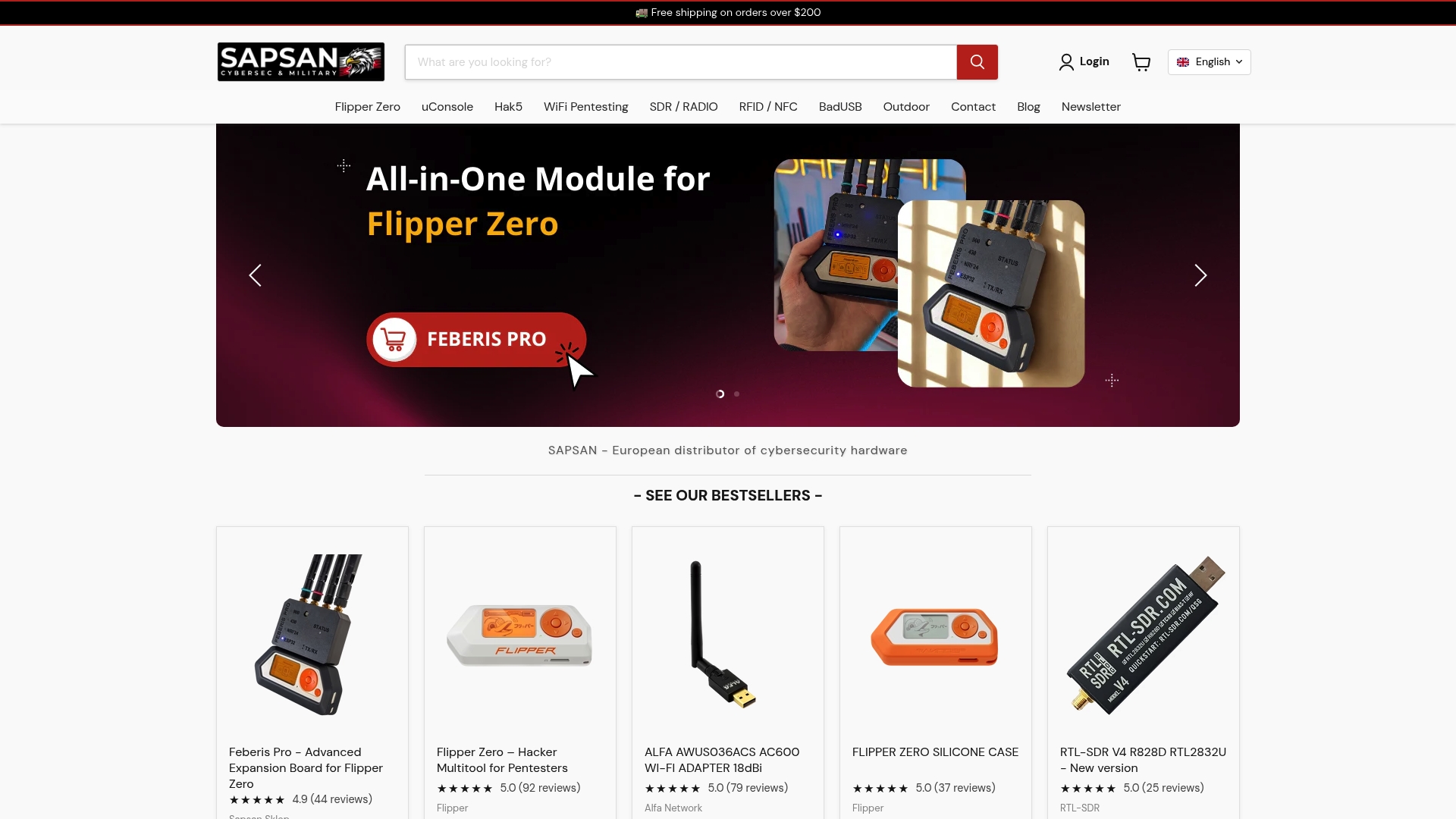
Closing the gap on the human-computer line requires strengthening the technical layer. Yubico NFC security keys are hardware MFA tokens that eliminate the risk of credential phishing. Unlike SMS codes or TOTP apps, hardware keys are resistant to man-in-the-middle attacks and real-time phishing. For privileged accounts, this isn't an option — it's the standard. Sapsan stocks a wide range of penetration testing and security awareness tools, both for SOC teams and individual pentesters.
Frequently asked questions
Which social engineering attack techniques dominate in Poland in 2026?
The most commonly used are phishing, smishing, and various forms of pretexting, especially against office workers. CERT Poland recorded 295,000 smishing reports, making it the dominant mobile vector.
How often should social engineering defense training be repeated?
Quarterly sessions or more frequent are optimal because training effectiveness fades after 3 months. One-off annual training does not provide lasting resilience.
Is MFA enough to stop a social engineering attack?
MFA significantly reduces risk, but the best defense is a layered strategy where MFA is just one element alongside resilience training and verification policies.
Which technical tools best detect social engineering attempts?
The best effectiveness comes from combined control systems: email security gateway, UBA (User Behavior Analytics), SIEM, and dedicated phishing detection platforms. None of them work effectively without the support of trained employees.