

What Is Social Engineering in Cyberattacks: A 2026 Guide
Most security incidents do not begin with an exploit in the code. They begin with a person who clicked a link. What is social engineering in cyberattacks? It is an attack method in which the vector is not a technical vulnerability but human psychology. In the industry it is known by the English term social engineering. Social engineering manipulates emotions, exploiting trust and routine to push the victim into clicking a link, downloading a file, or authorizing a transaction. In 2026, as attacks become increasingly personalized and multichannel, understanding these mechanisms is a precondition for effective defense.
Key takeaways
| Point | Details |
|---|---|
| The human as the primary vector | Social engineering bypasses technical safeguards by attacking the user's decisions and emotions. |
| Time pressure disables vigilance | Attacks built on urgency significantly reduce the effectiveness of routine verification. |
| Multichannel raises success rates | Mixing email, SMS, and phone gives attackers an edge over one-sided defense. |
| Testing replaces theory | Practical phishing and vishing simulations measure resilience more effectively than theoretical training. |
| AI changes the scale of the threat | Generative artificial intelligence automates the personalization of attacks at mass scale. |
What social engineering in cyberattacks is and how it works
Social engineering is the deliberate manipulation of people to gain access to systems, data, or funds. It requires no knowledge of software vulnerabilities. It requires knowledge of psychology.
The mechanism is precise. The attacker first identifies the target and gathers publicly available information about them: job title, professional relationships, the tools they use. Next they construct a credible narrative, a so-called pretext, tailored to the victim's role and context. The final step is triggering an emotion that drives action without verification.
The most common goals of social engineering are clicking a malicious link, downloading an infected file, entering login credentials, or authorizing a transaction. Each of these actions can be carried out by an employee who, under normal circumstances, knows security procedures perfectly well.
The key emotions that social engineering relies on:
-
Fear - „Your account has been blocked, act immediately.”
-
Urgency - „Urgent/final warning” messages create time pressure and disable analytical thinking.
-
Authority - impersonating a superior, the IT department, or a government institution.
-
Curiosity or hope - „You have won a prize, claim it now.”
-
Guilt - „Did you make this transaction? Contact us immediately.”
Heightened stress and a credible narrative reduce the inclination to verify and increase susceptibility to manipulation. This is not a flaw of specific individuals. It is a biological response to stress that affects everyone.
Professional tip: When you receive a message that triggers urgency or fear, pause for 30 seconds. That single step breaks the mechanism of impulsive action on which the attack's effectiveness depends.
Popular social engineering techniques in practice
Social engineering cyberthreats take many forms. Below is a hierarchy from the most common to the more advanced, with examples from real incidents.
-
Email phishing - mass messages imitating banks, streaming services, or telecom operators. According to Cisco Talos, in Q1 2026 phishing accounted for more than one third of the incidents handled by the incident response team in which the initial access vector could be established. The links lead to fake login pages that harvest credentials.
-
Spear phishing - a targeted version of phishing. The attacker knows the victim's name, their role, the software they use, and often also their superior's name. The message looks like internal correspondence.
-
Smishing (SMS) - text messages with fake alerts about parcels, payments, or bank accounts. Effective, because users less often scrutinize an SMS with the same vigilance as an email.
-
Vishing (phone) - a voice call from someone impersonating a bank employee, technical support, or a public office. Time pressure and the authority of a real person's voice significantly lower the victim's resistance.
-
Pretexting and impersonation - the attacker builds an elaborate fictional identity. Example: a person calls posing as an „environmental agency inspector” and requests system access to verify environmental data.
-
CEO fraud - a message seemingly from a director or CFO to a finance employee with a request for an urgent transfer. Social engineering uses multiple channels at once, often combining email with a confirming phone call from the „CEO's assistant”.
-
Scareware - malware or an advertisement claiming a supposed virus, pushing the user to download fake antivirus software. The fear mechanism works instantly.
Each of these techniques is thoroughly covered in resources on social engineering testing, which also discusses methods of detecting them.
The impact of social engineering on organizations and resilience testing
In 2025, CERT Polska/NASK recorded nearly 80,000 phishing cases, which amounted to about 30% of all handled incidents. At the same time, almost 250,000 malicious domains were added to the Warning List of dangerous sites. In smishing campaigns, victims can react very quickly. In a CERT Orange analysis, 80% of attempts to enter a fake site occurred within 15 minutes of the SMS's likely delivery. That window is too short to allow for reflection.
Types of tests and what they measure
| Test type | Channel | What it measures |
|---|---|---|
| Phishing simulation | Click rate, data submitted, reports filed | |
| Smishing simulation | SMS | Response to fake alerts and links in text messages |
| Vishing | Phone | Susceptibility to voice authority and pretexting |
| Physical (tailgating) | Building | Effectiveness of access control procedures |
Social engineering tests simulate phishing, phone, and SMS scenarios to measure employees' real resilience. The test result shows not only how many people clicked a link, but also how quickly the incident was reported to the security team.
The key conclusion from years of testing is clear: theoretical education without practical tests is insufficient. Test scenarios strike at the decision-making moment. An employee who knows the definition of phishing may still click a link if they have never experienced a realistic simulation.
Organizations that have implemented regular tests report a clear drop in click rates after just two rounds of simulation. The process works when it is repeatable and includes feedback after every test incident.
Professional tip: In social engineering tests, limiting yourself to email alone is a mistake. Mixing attack channels - SMS, phone, physical contact - gives a realistic assessment of the organization's resilience to real threats.
Organizations must invest in people and processes, because spam filters and firewalls will not stop an attacker who holds the victim's authorization. Technology is secondary here to human behavior.
New trends and challenges in 2026
Social engineering and security is today a relationship shaped by generative artificial intelligence. AI has changed two variables: scale and personalization.
Attackers use language models to generate spear phishing at mass scale. Previously, a personalized message to thousands of recipients required weeks of work. Today it is a matter of minutes and a few dollars for API access.
The trends that define the threats of 2026:
-
Deepfake audio and video - a forged director's voice in a phone call or a video clip with their likeness are tools already used in corporate incidents, not just in laboratories.
-
Multichannel attacks - the effectiveness of social engineering grows when an attack combines the weight of authority with time pressure and engages several channels at once, disabling routine verification procedures.
-
Impersonating app support - in 2026, attacks impersonating Signal technical support pushed users into clicking malicious links to take over accounts.
-
Automated pretexting - chatbots conducting realistic phone conversations with customer service staff.
-
Behavioral analytics as defense - systems monitoring anomalies in user behavior (UEBA) as a response to attacks that content filters do not detect.
Official guidance recommends treating every alert and every request to click as potentially malicious until confirmed through an independent communication channel. It is a simple rule, but it requires implementation at the process level, not just in security policy.
It is also worth paying attention to attacks aimed at IoT infrastructure. They are described in detail in the context of cyberattacks on IoT devices, where social engineering serves as the entry vector into industrial networks.
My perspective on effective defense
Experience in incident analysis and simulations points to one unchanged pattern: organizations lose not because they lack tools. They lose because they have gaps in their processes.
I have seen companies with advanced SIEM and EDR systems fall victim to vishing because no one formalized a procedure for verifying a caller's identity. The employee had good intentions and bad habits.
Time pressure degrades security precisely and predictably. Attackers know that the decision-making moment after receiving an urgent message is the weakest point in the entire chain of defense. The only effective answer is to replace the impulsive reaction with a habit: „every urgent request requires confirmation through another channel.”
What actually works is a combination of three elements. Training based on simulations, not slides. Processes that enforce verification through an independent channel for transactions above a defined threshold. And an organizational culture in which reporting a suspicion is rewarded, not ignored.
My testing experience also shows something unexpected: people from technical departments are often more susceptible to vishing than administrative staff. Technical self-confidence can be an obstacle. The belief „I know how attacks work” is not the same as the habit of verifying every request in real time.
Social engineering testing tools from Sapsan-sklep
Understanding the mechanisms of social engineering is the starting point. Practically testing an organization's resilience requires the right hardware and methodology.
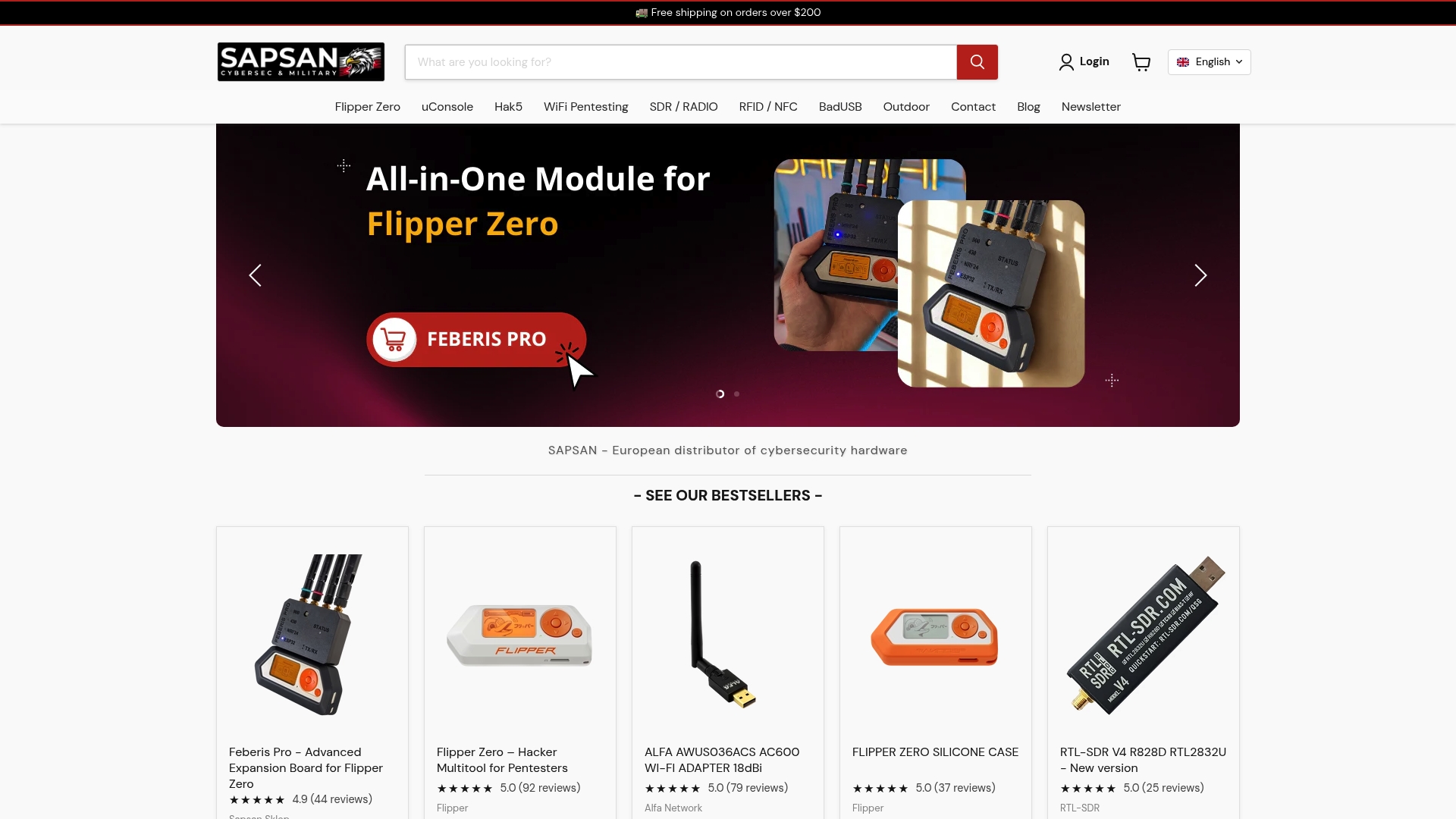
Sapsan-sklep supplies specialized hardware for pentesters and red teams across the EU and the USA. The range includes Wi-Fi network testing tools, BadUSB devices, RFID/NFC gear, and Flipper Zero accessories used in simulations of physical and multichannel attacks. For specialists running social engineering tests, pentesting equipment is available, along with a full hardware base supporting the testing methodologies described in ethical hacking and proven methodologies. The Sapsan-sklep catalog is a single place for professionals looking for high-quality equipment with fast delivery.
FAQ
What is social engineering in cyberattacks?
Social engineering (social engineering) is an attack method based on the psychological manipulation of a victim in order to gain access to data, systems, or funds. Instead of exploiting technical vulnerabilities, the attacker exploits a person's trust, fear, or urgency.
What are the most common social engineering techniques?
The most common techniques are email phishing, spear phishing, smishing (SMS), vishing (phone), pretexting, CEO fraud, and scareware. Phishing accounts for more than one third of successful attack vectors in Q1 2026.
How do you protect an organization against social engineering?
The basic defense is regular phishing, vishing, and smishing simulations, implementing an identity verification process through an independent channel, and building a culture of reporting incidents. Message-filtering technology alone is not enough.
Does AI change social engineering threats?
Yes. Generative artificial intelligence lets attackers create personalized phishing messages at mass scale and generate deepfake audio and video for vishing attacks, which significantly increases the credibility and scale of the threats.
How quickly do victims react to phishing?
Most visits to phishing sites occur within 15 minutes of receiving the message. This short decision window is a deliberate tool of attackers, based on time pressure that eliminates careful verification.