

Pentest Engagement Scope: A Guide for Professionals
The scope of a pentest engagement is one of the most underestimated elements of the entire penetration testing process. Most pentesters understand what penetration testing is in general terms, but treat the scope as a simple list of IP addresses to scan. This is an error that costs projects time, money, and credibility. The engagement scope is a formal record of test boundaries, which defines assets, techniques, and test duration. Without a precise scope, even the best pentester operates in a vacuum, and the client receives a report that doesn't meet their actual needs.
Table of Contents
How Black/Grey/White Box Model Affects the Scope and Course of Penetration Tests
The Role of Precise Scope Definition in Legal Safety and Test Result Quality
Practical Guidelines and Examples for Scoping Web Application and API Pentests
Why Precise Scope Definition Is the Biggest Challenge and Key to Pentest Success
Pentesting Tools and Equipment Supporting Engagement Scope Execution
Key Takeaways
| Point | Details |
|---|---|
| Engagement scope | A formal document defining which systems and testing methods are permitted. |
| Testing models | Black, grey, and white box differ in information access, affecting the scope and test results. |
| Importance of precision | Precise scope definition minimizes legal risk and ensures accuracy of results. |
| Web app scope | It is important to include endpoints, user roles, and authentication types. |
| Costs and time | A larger test scope generates higher costs and requires more time and resources. |
Components of Pentest Engagement Scope
Moving from the general introduction, let's discuss in detail the key components of an engagement scope. The pentest engagement scope is not uniform. It consists of three distinct dimensions, each defining different test boundaries and requiring separate agreement with the client.
The engagement scope breaks down into target scope, technique scope, and time scope. This three-part division is worth using as a template during every kick-off meeting with the client. From our experience as a pentesting equipment supplier, we know that clients most often return for additional tools precisely when the engagement scope changes during the project - precise scope definition at the start saves time and budget.
Target scope defines which systems, networks, and applications are subject to testing. It includes:
Specific IP addresses, CIDR ranges, or domain names
Web applications identified by URL or environment (production, staging)
Exclusions, i.e., systems the tester cannot touch, e.g., third-party production systems
Network devices: routers, firewalls, switches
Cloud infrastructure with specified accounts and regions
Technique scope defines what attack methods are permitted. This is one of the areas where misunderstandings occur most frequently. The client may expect a full test but prohibit vulnerability exploitation because they fear system downtime. Technique scope includes decisions regarding:
Vulnerability exploitation (with or without payload)
Denial of Service (DoS) attacks, which are usually prohibited in production environments
Social engineering, phishing, and pretexting
Physical attacks on infrastructure
Privilege escalation methods and lateral movement
Time scope is the window in which tests can take place. It defines the hours and days of permissible testing activities. It also includes blackouts - periods when testing is prohibited, e.g., during financial closing or system updates. Omitting this element leads to situations where the tester launches a scanner on Friday at 11 PM, and the client's monitoring triggers an alarm that nobody expects to handle.
It is worth familiarizing yourself with penetration testing methodologies, which specify how these three dimensions are formalized in various industry frameworks.

How Black/Grey/White Box Model Affects the Scope and Course of Penetration Tests
Knowing the scope elements, let's analyze how different testing models affect scope definition and execution. The choice of model is not just a methodological issue. It directly determines what can be checked, how deeply, and at what cost.
The black/grey/white box model determines the tester's level of knowledge and access, which in turn affects how detailed the engagement scope needs to be in documentation.
| Model | Tester's knowledge | Typical scope | Execution time | Advantages |
|---|---|---|---|---|
| Black box | None (only public info) | External systems and IP addresses | Longest | Realistic picture of external attack |
| Grey box | Partial (credentials, architecture) | Web applications with test accounts | Medium | Balance between realism and depth |
| White box | Full (code, architecture, infrastructure) | Entire technology stack | Shortest per system unit | Maximum depth and coverage |
A few practical observations about each model:
Black box requires an extensive target scope because the tester must map the infrastructure independently. The technique scope is usually broader here but limited to external actions.
Grey box is the most commonly chosen model in commercial security testing services. The scope includes credentials provided by the client and possible network diagrams.
White box shifts the weight of scoping to technical documentation. The tester needs access to code repositories, architecture diagrams, and system configurations. The scope must specify which repositories and environments are covered by the test.
A detailed overview of equipment supporting various black/grey/white box models can be found in a dedicated article.
The Role of Precise Scope Definition in Legal Safety and Test Result Quality
After discussing testing models, let's focus on the legal and quality consequences arising from the scope. This is an area that many pentesters treat as a formality. It is not.
Lack of written consent and precision exposes both the testing company and the tester themselves to legal liability. In Poland, unauthorized testing can be classified as a violation of cybersecurity law or the Criminal Code regarding unauthorized access to computer systems.
Two key documents formalizing the scope are SOW (Statement of Work) and ROE (Rules of Engagement). The difference between them is fundamental and often overlooked:
SOW defines what is being tested. It contains the list of systems, applications, environments, and exclusions.
ROE specifies how the test should proceed. It regulates permitted techniques, testing hours, escalation rules, and stop conditions.
Separating these documents has practical significance. The SOW is signed by a lawyer or project manager on the client side. The ROE is signed by a technically responsible person, e.g., the CTO or security manager. A signature on the wrong document by the wrong person does not provide the required authorization.
Pro tip: Always verify that the person signing the ROE has actual authority to grant consent for testing. An IT employee's signature without proper authorization does not protect you legally in the event of an incident.
Steps for properly establishing the scope:
Define the systems covered by the test and prepare an exclusion list
Establish permitted methods and techniques, note any prohibitions
Define the time window and plan blackouts
Define test stop conditions and escalation procedures
Approve documentation with signatures of authorized persons on both sides
A complete analysis of formal requirements can be found in the article on penetration testing methodology and rules.
Practical Guidelines and Examples for Scoping Web Application and API Pentests
With the general rules and risks in mind, let's move to practical aspects of scope definition in web application testing. This type of testing has its own specifics that require a very precise approach to scoping.
The scope of a web/API test is defined at the level of URLs, endpoints, and access roles. Precise definition of authentication testing coverage is essential.
In practice, the scope of a web application test should include:
List of URLs and API endpoints: providing just the domain is not enough. You need to specify whether all subdomains, specific paths, versioned APIs (v1, v2), and environments (production vs staging) are being tested.
Access roles to include: anonymous user, registered user, moderator, administrator. Each role opens a different set of functionalities and potential vulnerabilities.
Test data scope: what test accounts the client provides, what data can be created and modified during the test.
Environmental limitations: whether tests can touch production databases, or whether the tester works exclusively on a staging environment.
Specific threats to investigate: the client may prioritize OWASP Top 10, business logic, or cross-account authorization.
Imprecise access role definition is one of the most common errors. The tester tests exclusively as an anonymous user, while the most serious vulnerabilities lie in the admin panel. The final report doesn't cover the areas the client cares about most, and the engagement is considered unsuccessful. In conversations with pentesters buying equipment from us, this scenario repeats regularly - the client expected an admin panel test, but nobody documented it in the scope.
Pro tip: Include in scope all key authentication and authorization paths, including password reset processes, OAuth, SSO, and API keys. These paths are the most commonly overlooked attack vector.
More technical aspects of web test scoping can be found in the guide on web application and API pentest scope.
Costs and Resources Depending on Pentest Engagement Scope
Finally, let's look at the pragmatic aspects of test execution. Scope directly translates to the budget and project timeline, and understanding this relationship helps avoid misunderstandings during pricing.
The larger and more complex the scope, the higher the cost and longer the test execution time. This seems obvious, but the details are less intuitive than you think.
| Engagement type | Typical execution time | Required number of testers | Factors affecting cost |
| External test (network) | 3 to 7 days | 1 to 2 | Number of IP ranges, infrastructure complexity |
| Web application test | 5 to 10 days | 1 to 2 | Number of endpoints, roles, and functionalities |
| Internal test (network) | 5 to 14 days | 2 to 3 | Network segmentation, number of hosts |
| Red team | 3 to 8 weeks | 3 to 5 | Operational objective, attack vectors, social engineering integration |
| Full pentest (web + network + red team) | 4 to 12 weeks | 4 to 6 | All of the above combined |
A few factors that less obviously affect resources and costs:
Scope exclusions: paradoxically, many exclusions can extend the test because the tester must constantly verify which systems they can attack and which they cannot.
Environment availability: testing on staging instead of production requires additional configuration and often separate test data.
Reporting: a detailed report with re-tests and debrief sessions can add 20 to 30 percent to the total engagement execution time.
Access to specialized tools: certain test vectors require dedicated equipment, which affects costs on the testing company's side.
More about planning pentest time and resources can be found in our materials for specialists.
Why Precise Scope Definition Is the Biggest Challenge and Key to Pentest Success
After discussing all practical aspects, it's time for an expert perspective. Engagement scope is a topic where the market has been making the same mistakes for years, and nobody talks about it openly.
The most common reason for a test not meeting client expectations is incorrect scoping and a poorly defined ROE. But the problem usually doesn't lie in technical negligence - it lies in the communication process.
Clients describe scope in business language. They say "test our systems" or "check if we're secure." Pentesters must translate this into a list of hosts, endpoints, and permitted techniques. This translation is where information is most frequently lost. We've observed this in the industry for years - pentesters ordering physical testing equipment from us often only learn after starting the engagement that the client didn't include physical server room access in the scope, despite expecting a "full security test."
The second frequently overlooked issue is test stop conditions. The ROE should specify what the tester does when they discover a critical vulnerability, e.g., remote exploitation without authentication on a production system. Do they continue, or immediately report to the client and wait for a decision? The absence of these rules leads to situations where the tester either stops too early or exploits a vulnerability in a way the client considers crossing boundaries.
Another mistake is the lack of business stakeholders in the scope definition process. Technical staff usually focus on infrastructure. Meanwhile, it's the risk manager or operations director who knows which business processes are critical and require prioritization. A scope defined solely by IT may miss the application handling 80 percent of the company's revenue because "it's an old system and everyone knows it."
Pro tip: Include business stakeholders in the scoping session. One meeting with the person responsible for business processes can reveal assets that the IT department didn't mention because they didn't consider them "IT."
Effective standardization of scope and ROE requires templates, processes, and organizational discipline. Companies that treat scoping as a one-time phone conversation regularly deliver tests that the client rates as useless.
Pentesting Tools and Equipment Supporting Engagement Scope Execution
Knowing the challenges and best practices, it's worth getting to know the tools that support pentesters in executing a precise engagement scope. The right equipment allows you to work faster, more accurately, and in full compliance with the established scope.
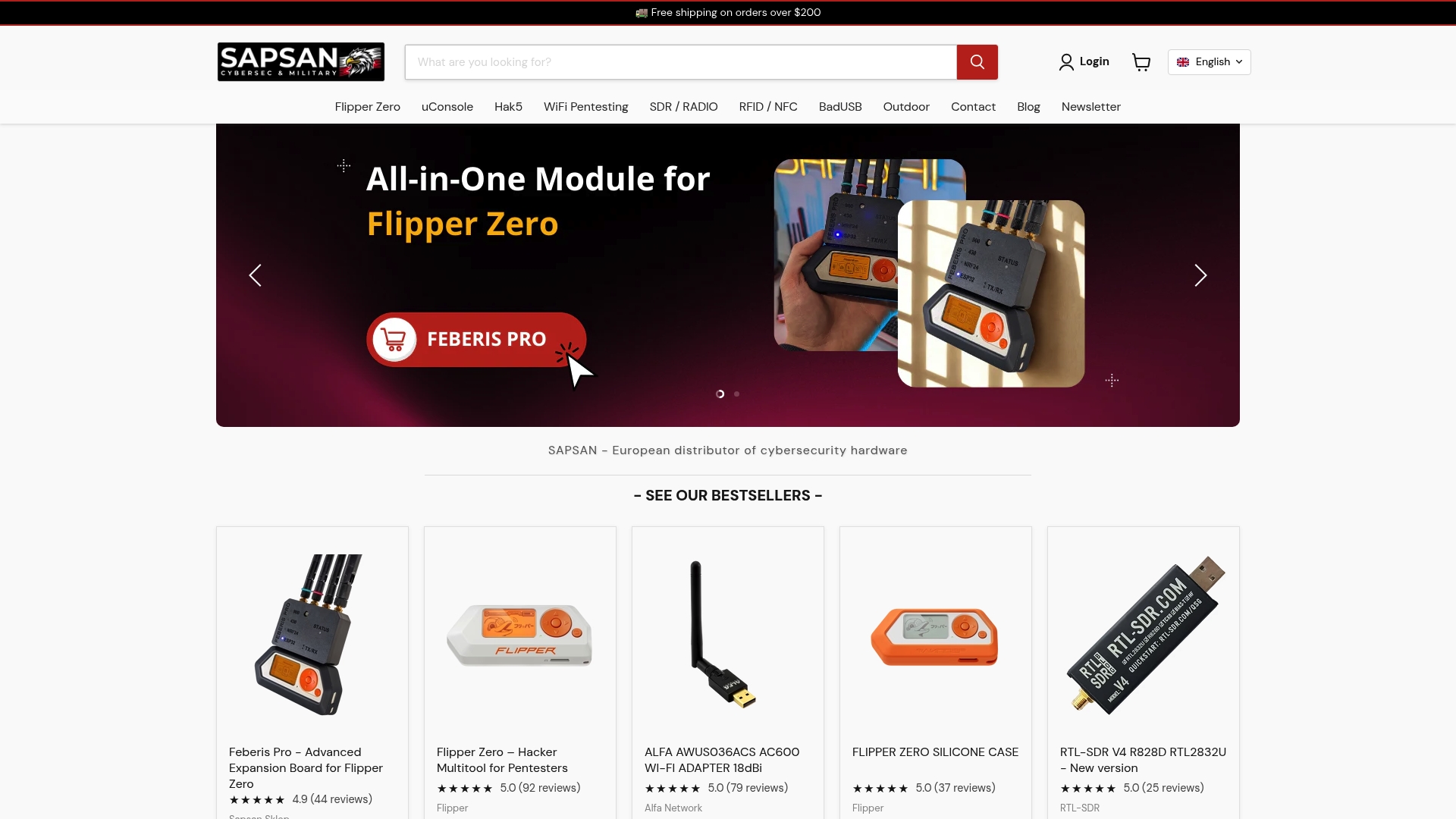
In the Sapsan catalog, you'll find equipment dedicated to specific test vectors covered by the engagement scope. Bash Bunny Hak5 is a versatile device for automating HID attacks and network tests, particularly useful in engagements involving physical access or endpoints. Packet Squirrel Mark II excels in internal testing and pivoting within the client's network where the scope covers LAN infrastructure. For engagements focused on web applications and APIs, web application pentest tools are available, covering the full range of OWASP-compliant tests. Sapsan ships throughout the EU and the USA, ensuring fast access to equipment regardless of project location.
Frequently Asked Questions
What is a pentest engagement scope?
The engagement scope is a formal record of test boundaries, permitted techniques, and execution time. It defines which systems are subject to testing, what attack methods are allowed, and in what time window tests can take place.
Why is precise scope definition so important?
An imprecise scope leads to misaligned expectations and legal risk. Precise definition of test boundaries prevents legal incidents and guarantees that the final report meets the client's actual needs.
What testing models affect pentest scope?
Black/grey/white box models define the tester's access level and affect the scope of testing. Black box simulates an attacker without infrastructure knowledge, grey box assumes partial access, and white box provides full insight into architecture and code.
What should a web application test scope include?
The scope of a web/API test is defined at the level of endpoints and access roles. A precise scope includes specific URLs, API versions, test environments, and all user roles from anonymous to administrator.
How does scope size affect the cost and time of penetration tests?
Scope directly translates to time and cost: external tests typically take 3 to 7 days, while comprehensive red team engagements can take several weeks. The more systems, roles, and techniques the scope covers, the greater the demand for resources and budget.